Boating Licence: what you need to study, who can get one, and how the exam works

For many boating enthusiasts, obtaining a boating licence is the natural next step after their first experiences on the water. Some see it as a necessary requirement to expand their cruising opportunities, while others view it as a chance to gain valuable skills and navigate with greater confidence and safety. In either case, before enrolling in a course or starting to study, it is common to have several questions: when is a boating licence mandatory? What subjects do you need to prepare for? Is the exam difficult? And most importantly, which licence should you choose?

Let’s explore everything you need to know about obtaining a boating licence.

What is a boating licence?

A boating licence is the certification that allows individuals to operate certain recreational vessels in situations specified by Italian maritime regulations. Beyond the administrative requirement, its purpose is to ensure that anyone in command of a vessel possesses the knowledge necessary to navigate safely, correctly apply navigation rules, and manage the most common situations that may arise at sea. To obtain a boating licence, candidates must pass both a theoretical and a practical examination, as well as meet the physical and psychological fitness requirements established by law.
When is a boating licence required and who can obtain one?

Not all boats require a boating licence, but Italian regulations specify certain situations in which certification becomes mandatory.

In particular, a boating licence is required:

  • When navigating more than 6 nautical miles from the coast;
  • When operating a vessel equipped with an engine producing more than 30 kW (40.8 hp);
  • When the engine displacement exceeds the limits established by law;
  • When operating personal watercraft (jet skis);
  • When practising water skiing.

As a result, many recreational boaters initially navigate without a licence but later decide to obtain one in order to operate higher-performance vessels or undertake longer and more demanding voyages.

To take the examination, candidates must meet several legal requirements:

  • For standard boating licences, applicants are generally required to be at least 18 years old and possess a medical certificate confirming physical and mental fitness;
  • In recent years, Italy introduced the Category D1 boating licence, designed to allow young people aged 16 and over to enter the world of boating through a certification subject to specific operational limitations.

Preparation can be completed either through a certified nautical school or as an independent candidate, depending on individual needs and previous boating experience.

Which boating licence should you choose?

One of the first decisions involves selecting the appropriate licence category.

The licence valid within 12 nautical miles from the coast is the most common among recreational boaters. It allows for the majority of coastal cruising and day trips. The unlimited-distance licence, on the other hand, permits navigation without distance restrictions and is generally the preferred choice for those planning offshore passages or more demanding voyages.

Applicants can also choose between:

  • Powerboat licence only;
  • Sail and power licence.

The latter also includes the operation of motor vessels and requires additional preparation related to sailing manoeuvres and sail navigation. Many prospective boaters wonder whether it is worth obtaining the unlimited licence from the start. The answer largely depends on personal goals: those who expect to expand their boating activities over time may find it beneficial to complete the more comprehensive qualification immediately, avoiding the need for future upgrades.
What do you study for the Boating Licence?

This is probably the question most frequently asked by those considering taking the exam. Contrary to what many people assume, the syllabus goes far beyond simply learning regulations. The subjects covered have strong practical applications and are closely linked to safe navigation.

Navigation regulations and rules

A significant part of the preparation focuses on recreational boating regulations, the responsibilities of the skipper, and the documents required on board. This section also includes the International Regulations for Preventing Collisions at Sea (COLREGs), which establish right-of-way rules, light and sound signals, and the procedures designed to prevent collisions.

Safety at sea

Safety is one of the cornerstones of the examination. Candidates must understand mandatory safety equipment, emergency procedures, and the primary regulations aimed at protecting human life at sea. These are practical skills that can make a critical difference in emergency situations, which is why they occupy a substantial portion of the syllabus.

Meteorology

Meteorology also plays a key role. During preparation, candidates learn how to interpret weather forecasts and understand phenomena such as wind, atmospheric pressure, and sea conditions. This knowledge helps skippers plan voyages more effectively and reduce the risks associated with adverse weather conditions.

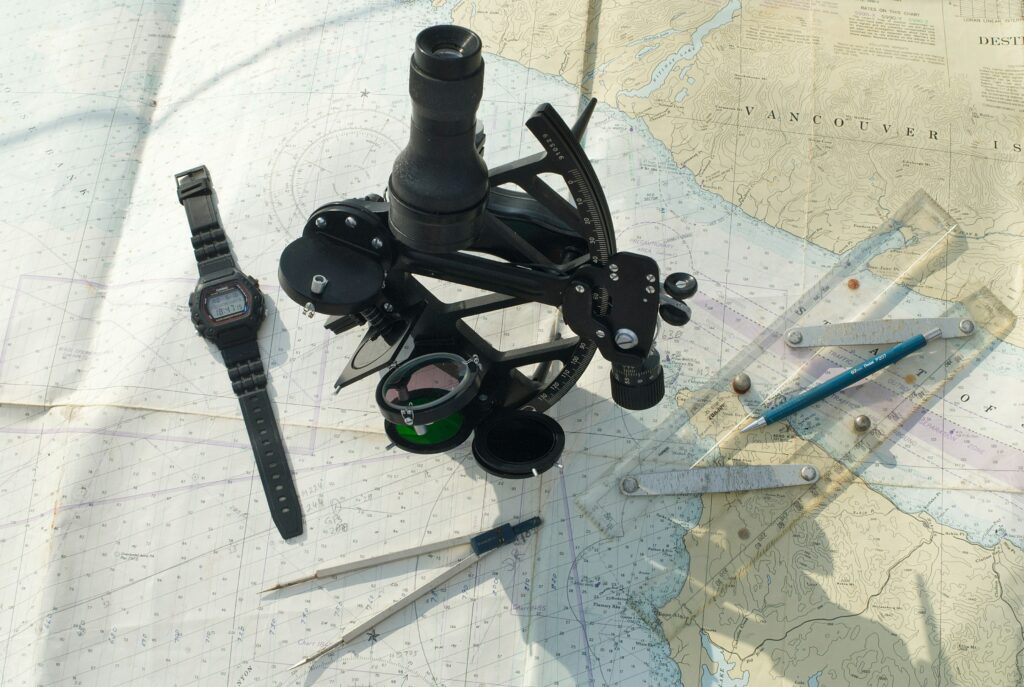
Nautical chartwork and navigation

For many candidates, this is the most technical aspect of the entire programme.

Chartwork includes activities such as:

  • Reading nautical charts;
  • Determining position;
  • Calculating courses;
  • Estimating travel times;
  • Using parallel rulers and navigation compasses.

It is a subject that requires practical exercise, particularly for those pursuing the unlimited-distance licence, where a deeper level of competence is required.

Vessel and engine theory

The programme also includes topics related to the structure of recreational vessels, marine engines, and essential maintenance principles. The objective is to help future skippers understand how their vessel operates and recognise potential malfunctions or hazardous situations.

Sailing navigation

Candidates choosing the sail-and-power qualification must also study sailing-specific topics, including sail terminology, points of sail, and fundamental sailing manoeuvres.
How does the examination work?

The examination process is regulated by Italian Ministerial Decree No. 323 of 10 August 2021, which standardised boating licence programmes and examination procedures throughout the country.

The examination consists of both a theoretical and a practical test:

– The theoretical test evaluates the candidate’s knowledge of the subjects included in the official syllabus. Depending on the licence category, the exam may include multiple-choice questions and chartwork exercises.

The practical test assesses the candidate’s ability to operate a vessel safely. Typical tasks include departure manoeuvres, vessel handling, docking, mooring, and demonstrating the skills required to manage the most common situations encountered during navigation. For sail-and-power licences, candidates are also assessed on specific sailing manoeuvres.

Is the exam really difficult?

The level of difficulty largely depends on the candidate’s preparation and the type of licence chosen.

The licence valid within 12 nautical miles from the coast generally involves a more limited syllabus than the unlimited-distance licence, which requires greater familiarity with chartwork and advanced navigation concepts. In most cases, however, candidates successfully pass the examination when they dedicate sufficient time to both study and practical training. Rather than being viewed as an obstacle, the exam should be considered a verification of the skills necessary to navigate safely and responsibly.

A boating licence is not simply a legal obligation in certain circumstances. Above all, it is an educational journey that provides the knowledge needed to enjoy life at sea with greater independence, confidence, and awareness. From meteorology and chartwork to navigation rules and safety procedures, every topic covered during preparation has a direct and practical application on board. For this reason, obtaining a boating licence is not only about earning a certification: it is about developing the skills that make boating safer for yourself, your passengers, and everyone sharing the water.
Technical insight into propellers: The parameters behind performance

marine propeller design parameters

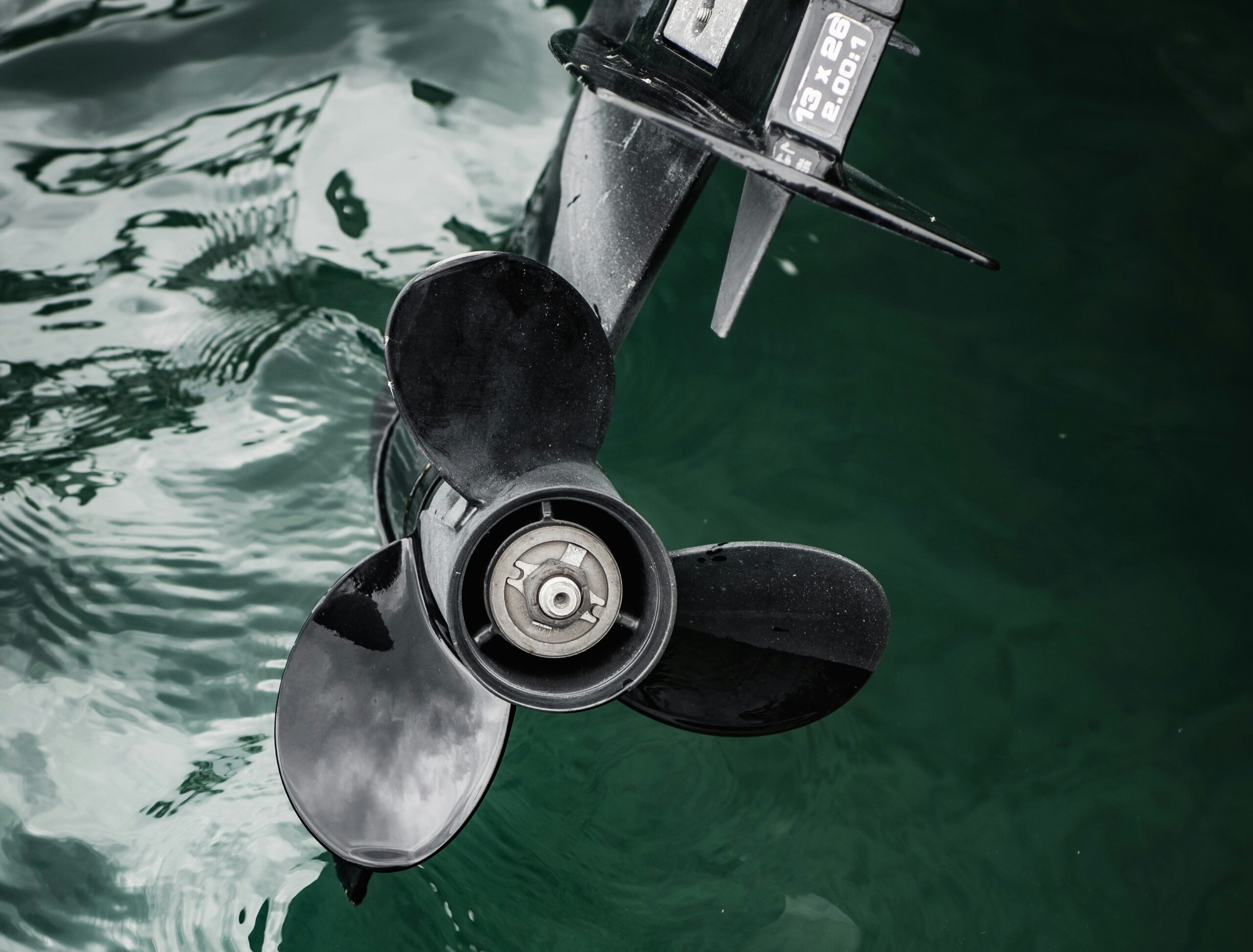
After analyzing the main elements that influence the choice of a propeller, it is useful to examine in greater depth the geometric and functional parameters that determine a propeller’s actual behavior in water.

Characteristics such as rake angle, cup, skew angle, and the various blade area parameters directly affect load distribution, propulsive efficiency, ventilation phenomena, and cavitation. These variables do not act independently; rather, they collectively define the propeller’s operating behavior in relation to the hull, operating regime, and engine characteristics. Let’s, therefore, examine the main parameters used in propeller design and evaluation.

rake

The rake angle is the angle of inclination of the blade relative to a plane perpendicular to the propeller shaft axis.

A positive rake (blades inclined aft):

  • modifies thrust distribution by introducing a component that can influence the boat’s longitudinal trim, tending to lift the stern
  • improves propeller grip in demanding conditions (turning maneuvers, rough seas)
  • may slightly increase engine load, and therefore must be selected in balance with pitch and diameter.

A low rake angle, on the other hand, generally provides greater stability at low speeds, with less stern lift. The overall effect of rake depends on the vessel configuration and the position of the propeller relative to the hull.

cup

The cup is a curvature applied to the trailing edge of the blade. It is a small detail, but one with very significant effects on the boat’s performance.

The cup increases the propeller’s grip on the water and helps prevent the propeller from “slipping” or drawing in air, especially during acceleration or while turning.

The introduction of cup results in:

  • an increase in the effective load on the propeller
  • a possible reduction in the engine’s maximum RPM with the same configuration
  • improved flow retention, particularly during acceleration or under heavy-load conditions.

The cup is typically used as a fine-tuning parameter without modifying the nominal diameter or pitch.

slip

The slip represents the difference between the propeller’s theoretical advance, determined by its geometric pitch, and the actual advance per revolution. It is an operating parameter used to evaluate the real efficiency of the propulsion system.

The slip is generally expressed as a percentage and depends on:

  • the vessel’s load conditions
  • rotational speed
  • characteristics of the incoming flow (wake)
  • operating conditions (calm sea, rough sea, presence of air).

The slip should not be considered an eliminable loss, but rather a natural consequence of propeller operation in a real fluid environment. It varies depending on both the type of vessel and the propulsion configuration: outboard, sterndrive, shaft drive, or surface-piercing propellers.

Excessive slip may indicate:

  • an incorrect match between pitch, RPM, and load
  • the presence of ventilation or cavitation.

marine propeller blade geometry and performance analysis

Projected Blade Area (PAR)

The Projected Blade Area (PAR) is the blade area projected onto a plane perpendicular to the propeller shaft axis — in other words, the projection visible when looking directly at the propeller blade. It represents the surface effectively exposed frontally to the flow and indicates the propeller’s ability to generate thrust.

Developed Blade Area (DAR)

The Developed Blade Area (DAR) is the blade area obtained by geometrically developing the blade surface onto a plane — essentially the area of the blade outline if the blade were detached from the hub and flattened to zero pitch. The DAR is a parameter used to indicate how much “blade material” is distributed within the propeller disc.

Expanded Blade Area (EAR)

The Expanded Blade Area (EAR) is the blade area obtained by projecting the blade onto a cylindrical surface and then developing it onto a plane. In practical terms, it is the blade area after the DAR has been flattened.

It is one of the most commonly used parameters in propeller design because:

  • it more realistically represents the blade’s active surface area
  • it correlates with the propeller’s ability to absorb power without triggering cavitation.

Blade area parameters (PAR, DAR, EAR) originate from naval design literature and are used to evaluate load distribution and the propeller’s hydrodynamic behavior.

The Cartello approach

The analysis of the main geometric and functional parameters of a propeller highlights how its behavior in water is the result of a complex and interdependent set of variables. Elements such as rake angle, cup, slip, and blade area parameters (PAR, DAR, EAR) do not act independently, but work together synergistically to determine the propeller’s ability to convert engine power into useful thrust.

In this context, it is essential to emphasize that the propeller is not a secondary or merely accessory component of the propulsion system. Rather, it is the true interface element between the engine and the water. It is precisely through the propeller that the engine’s delivered power is transformed into effective propulsive force. Consequently, even with an efficient hull and high-performance engines, an incorrect propeller choice can significantly compromise the vessel’s overall behavior. A propeller that is improperly sized or not optimized for the operating regime, load, and working conditions may generate several negative effects, including:

  • increased slip and reduced propulsive efficiency
  • more frequent ventilation or cavitation phenomena
  • inability of the engine to operate within its correct RPM range
  • increased specific fuel consumption
  • reduced top speed and acceleration efficiency
  • possible engine overload or underutilization.

Conversely, proper propeller design or selection makes it possible to achieve the best balance between thrust, efficiency, and operational reliability, ensuring that the engine operates within its optimal efficiency range and that the available power is effectively translated into real vessel performance.

In summary, the overall performance system of a vessel (engine + propeller + hull + load + operating conditions) does not depend solely on hull quality or installed power, but on the overall balance among all its elements. Within this balance, the propeller represents the determining factor: an excellent boat and powerful engines cannot express their full potential if the propeller is unable to transfer thrust correctly into the water.

For this reason, propeller selection should be considered a fundamental design and operational phase, to be carried out using accurate technical criteria and in direct relation to the vessel’s characteristics and its operating profile. This is where Cartello comes into play: thanks to technicians with decades of experience, the company offers dedicated and personalized consultancy for propeller selection, as well as the possibility of creating highly customized products.

boat propeller efficiency and cavitation behavior

Cox Marine Opens New Multi-Functional Training and Collaboration Space at UK Headquarters

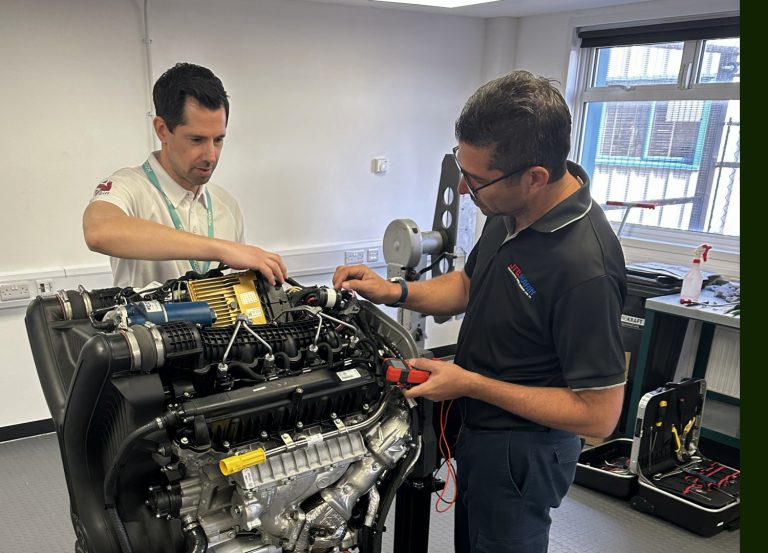
Cox Marine, the British manufacturer of high-performance diesel outboard engines, has officially opened a new multi-functional training and collaboration space at its UK manufacturing headquarters in Shoreham-by-Sea.

Designed primarily to support technical and product training for Cox Marine’s global network of distributors, dealers, service partners and customers, the new facility provides a dedicated environment for hands-on learning centred on the Cox Marine V8 diesel outboard. The space also serves as a versatile hub for wider collaboration, enabling internal team engagement, cross-functional meetings and company-wide briefings as Cox Marine continues to expand its global operations.

Named “Drummond” in honour of pioneering British marine engineer Victoria Drummond, the space recognises her contribution to maritime engineering and her legacy as one of the first female marine engineers to sail as a fully qualified officer in the British Merchant Navy. The name reflects Cox Marine’s respect for the heritage that continues to shape innovation across the maritime sector today.

Located within the company’s manufacturing headquarters, the facility offers attendees a direct connection to Cox Marine’s production environment. Participants benefit from both classroom instruction and practical technical training, gaining firsthand exposure to the engineering precision and manufacturing standards behind the Cox Marine V8 platform.

The investment reflects Cox Marine’s ongoing commitment to supporting its global partner network while strengthening internal collaboration across the business. As demand for diesel outboard technology continues to grow worldwide, the facility will play a key role in ensuring partners and customers are equipped with the technical knowledge and certification required to support expanding fleets.

The facility has already hosted its first distributor training programme, welcoming representatives from JTC Marin, Cox Marine’s distributor in Panama. During the session, the JTC Marin team received the latest product updates, technical guidance and hands-on factory training, enabling them to return to Panama equipped to deliver training and support to their own dealer network and customers.

Importantly, the UK-based facility complements Cox Marine’s established global training programme. In partnership with its Technical Support Engineers, the company continues to deliver structured training across key international markets. This blended approach allows distributors and dealers to either travel to the UK for factory-based immersion or access in-market training delivered directly by Cox Marine specialists, ensuring consistent standards across the global network.

George Bramley, CEO of Cox Marine, commented: “The opening of this new space marks an important step for Cox Marine as we continue to grow internationally. While its primary focus is technical training for our partners and customers, it also fosters collaboration across the business. Bringing teams, partners and customers together in one place strengthens knowledge sharing, alignment and ultimately the support we provide to operators worldwide.”

By combining product training, partner engagement, and internal collaboration in a single environment, the new facility supports Cox Marine’s long-term strategy of building a highly capable global service network while maintaining the brand’s premium standards.

As Cox Marine expands into new markets and secures future growth opportunities, the new training and collaboration space will play a central role in delivering consistent technical expertise, operational support and engagement across its worldwide distribution network.

Everything you need to know about propellers and why they make the difference on board

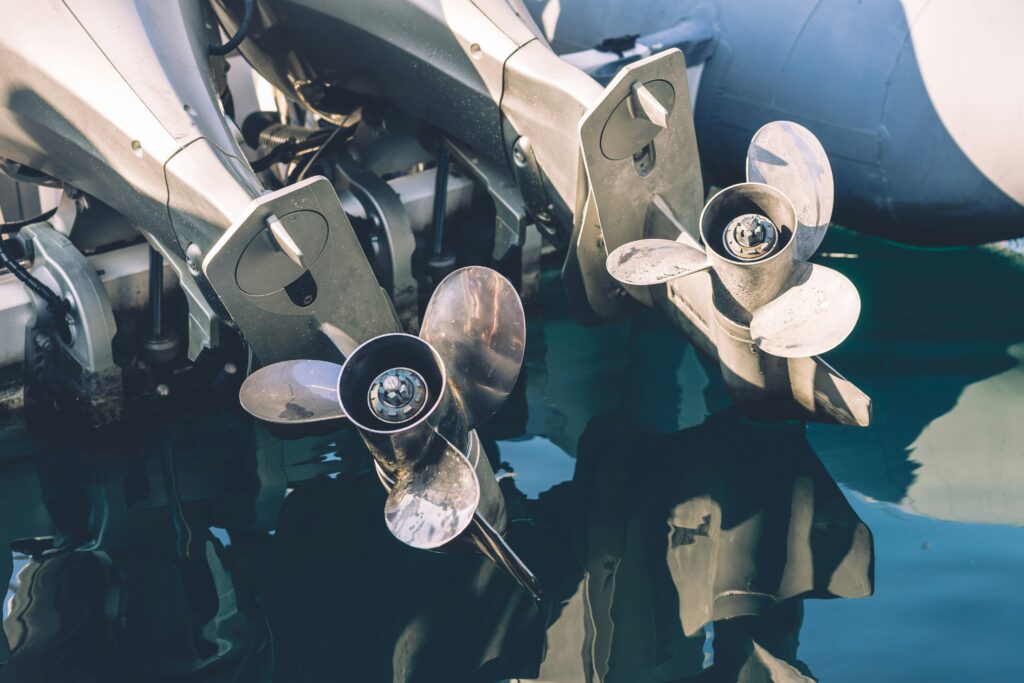
When we talk about performance, fuel consumption and navigation experience, the attention of ship owners and enthusiasts is often focused on engines, hull materials or electric systems. Nevertheless, there is a fundamental component directly affecting efficiency, comfort and safety on board: the propeller.

To choose the right propeller is not only a technical matter. A wrong choice, an incorrect installation or the use of a unsuitable propeller can jeopardise important investments, increasing wastes, worsening controls responses and reducing cruising comfort. In other words: even the best engine can be penalized without the right propeller.

In this article, we will discover why the propeller is so important, which elements influence its performances and how to make conscious choices to better and safely navigate. The following indications are absolutely general and each situation has to be evaluated case-by-case, since performances depend on complex factors related to every different boat.

The importance of the propellers: some basics

In order to understand how much the propeller affects a vessel performance, there is no need to explore complex technical terms.

Numer of blades and pitch

  • Three blades: higher top speed and cruising efficiency.
  • Four blades: smoother and more controllable thrust, ideal for maneuvering, reverse, or when the boat is heavily loaded.

Diameter and material

  • Correct diameter: it best exploits the engine torque.
  • Quality material: it reduces vibrations, increases silence and duration. 

Context of use

Boat type, weight, displacement, power, propeller RPM and operating range determine the most suitable propeller. All these factors taken into account, it does not exist a “standard” propeller valid for every vessel, but it is possible to identify the most suitable solution evaluating the whole environment.

The benefits of a well-chosen propeller

An accurately sized propeller directly affects a vessel’s performance, improving control, energy savings and navigation quality. Among the main advantages we can mention:

  • Improved maneuverability: precise and predictable responses even in delicate manoeuvres, tight moorings or with changeable sea conditions.
  • Optimised fuel consumption: the engine operates at its ideal RPM, avoiding wastes and increasing autonomy and overall efficiency.
  • Comfort on board: vibrations and noise reduction, with less fatigue for crew and passengers.
  • Duration of the propulsion system: less stress on the engine, transmission and shaft line, helping to prolong the components life.

The propeller, then, is not a simple technical detail: it is a key element determining maneuverability, efficiency and comfort during every navigation, concretely affecting the overall experience on board.

Cartello’ s strategic role

The choice of the propeller is strategic. That is why Cartello cooperates with high-level partners such as Nakashima Propeller, leader in the desing and production of propellers.

This partnership allows Cartello to provide tailored solutions for every different boat, taking into consideration technical specifications, desired performances and operating conditions. Thanks to Nakashima’s engineering precision and Cartello’s technical competence, customers are able to select and optimise the most suitable propeller in order to improve efficiency, comfort and reliability. Moreover, Cartello integrates in its service a personalised technical consultancy, helping boat owners, boat builders and professionals to evaluate the vessel needs and choose the most suitable propeller in line with navigation aims.

With such approach, a propeller is not a simple component anymore, but a design integrated element, designed to work in synergy with the engine, transmission, and other elements of the vessel.

When to check the propeller

There are specific situations when a propeller check is not only right, but mainly necessary, for example:

  • After an engine upgrade or change
  • After structural modifications or increase in weight
  • In case of vibrations, noises or unexpected consumptions
  • Before an intense season of navigation

A targeted technical evaluation in these cases can make a difference in terms of safety and performance.

Although it might seem a detail, the propeller is key for an efficient, cosy and safe navigation. Choosing a quality product such as Nakashima propellers and relying on Cartello’s expertise means getting the most out of your boat, reducing waste and increasing the pleasure of navigation.

Would you like to improve your boat’s performance?

Contact our experts who will help you choose the right propeller according to your needs.